




#Southeast Asia Electronics Manufacturing: Các thực tiễn tốt nhất về nguồn cung linh kiện
Ngành điện tử của Nam Á đạt 268,8 tỷ USD xuất khẩu bán dẫn vào năm 2023, đưa khu vực này trở thành trung tâm đa dạng hóa chuỗi cung ứng quan trọng. Đối với các quản lý mua sắm tìm nguồn cung tại Việt Nam, Malaysia, Thái Lan và Indonesia, việc hiểu rõ năng lực khu vực, hạ tầng logistics và quy trình chất lượng ảnh hưởng trực tiếp đến thời gian giao hàng, chi phí và độ tin cậy. Hướng dẫn này cung cấp các chiến lược đã được kiểm chứng, điểm mạnh theo từng quốc gia và khung rủi ro dựa trên thương mại thành phần khu vực trị giá 28,8 tỷ đô la.
Dịch vụ mua sắm của Hitop Tech Limited tận dụng các mối quan hệ sản xuất tại Đông Nam Á để đảm bảo giá cả cạnh tranh, chất lượng đã được xác minh và giao hàng đáng tin cậy cho khách hàng, đa dạng hóa chiến lược cung ứng.
Mục lục
- [Bối cảnh và Năng lực Sản xuất Khu vực] (Cảnh quan #regional)
- [Ưu điểm nguồn cung ứng theo từng quốc gia] (ưu điểm #country)
- [Hạ tầng chuỗi cung ứng linh kiện] (chuỗi #supply)
- [Yêu cầu kiểm tra chất lượng và tuân thủ] (xác minh #quality)
- Logistics và Mua sắm xuyên biên giới
- [Chiến lược tối ưu hóa chi phí] (tối ưu hóa #cost)
- Câu hỏi thường gặp
- Kết luận
Bối cảnh và năng lực sản xuất khu vực
Hệ sinh thái điện tử của Đông Nam Á đã phát triển từ hoạt động lắp ráp đến bao bì bán dẫn tinh vi, chế tạo PCB và tích hợp hệ thống. Thị trường bán dẫn ASEAN tăng trưởng từ 95,91 tỷ USD năm 2024 lên dự kiến 212,33 tỷ USD vào năm 2032, tương ứng với mức tăng trưởng hàng năm 9,9% nhờ điện tử ô tô, hạ tầng AI và đa dạng hóa chuỗi cung ứng.
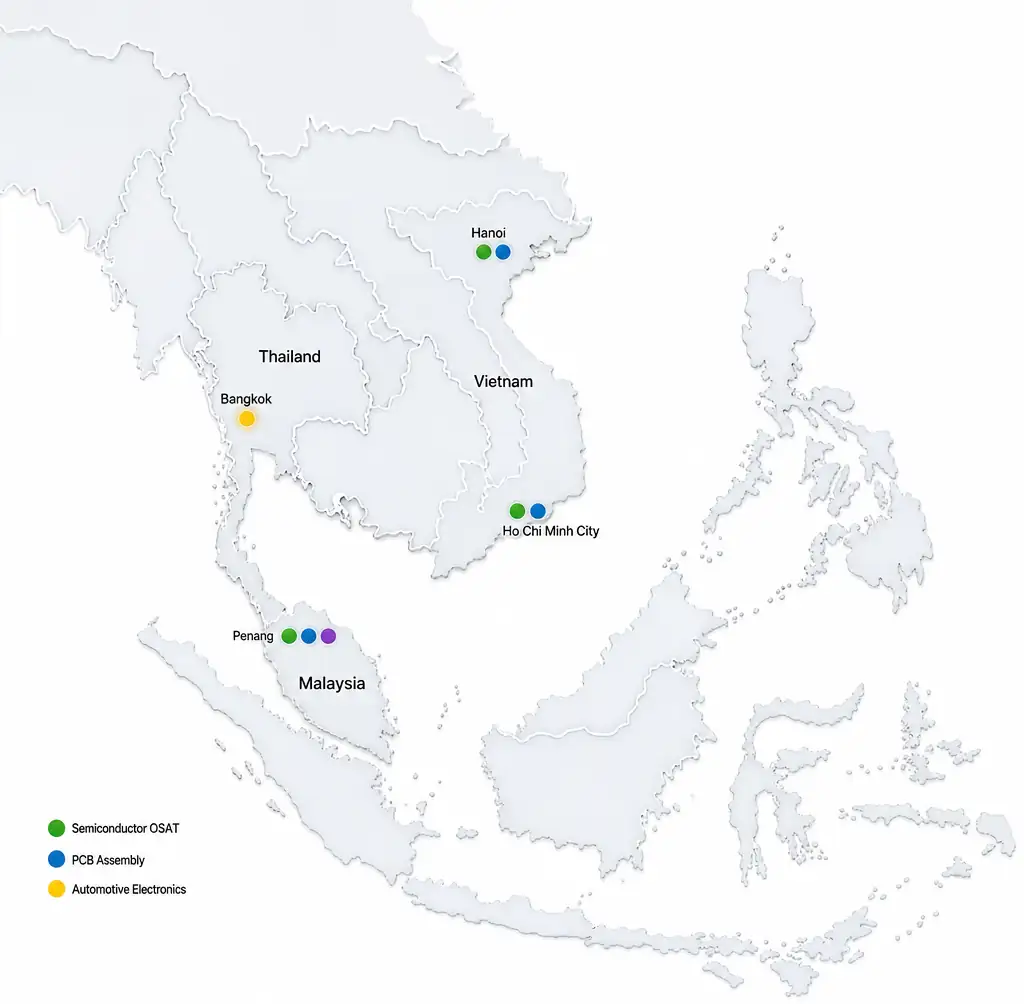 Bản đồ các cơ sở sản xuất bán dẫn Đông Nam Á thể hiện các trung tâm chính ở Malaysia, Việt Nam, Thái Lan
Malaysia chiếm 13% thị phần bán dẫn toàn cầu thông qua hoạt động OSAT tại Penang. Tổ hợp đóng gói tiên tiến trị giá 7 tỷ đô la của Intel (hoạt động năm 2026) và sự mở rộng 5 tỷ MYR của Texas Instruments tại Melaka cho thấy đầu tư liên tục. Năm 2024, Việt Nam xuất khẩu 126,5 tỷ đô la điện tử, được thúc đẩy bởi các hoạt động của Samsung, LG và Foxconn thay vì sản xuất hợp đồng phổ biến.
"Khoảng trống tuyệt vời" có những hạn chế. Trong số 64 nhà máy bán dẫn mới ở châu Á tính đến năm 2029, chỉ có 6 nhà máy đặt tại Đông Nam Á. Hầu hết các linh kiện thụ động, IC và bán dẫn rời rạc đều có nguồn gốc từ Trung Quốc, Đài Loan hoặc Nhật Bản, với các cơ sở khu vực xử lý lắp ráp, kiểm tra và tích hợp.
| Quốc gia | Độ bền điện tử sơ cấp | Đầu tư lớn 2024-2026 | Phù hợp với người mua nhỏ đến trung bình |
|---|---|---|---|
| Malaysia | OSAT bán dẫn, đóng gói tiên tiến | Intel $7T, TI MYR 5B, Chipbond $200M | Công suất trung bình dành cho khách hàng lớn |
| Việt Nam | Lắp ráp điện tử tiêu dùng, PCB | Mở rộng Samsung/LG, năng lực Foxconn | Thấp - đa quốc gia chi phối |
| Thái Lan | Điện tử ô tô, ổ cứng | Mở rộng Western Digital | Cơ sở nhà cung cấp SME mạnh mẽ |
| Indonesia | Điện tử công suất, lắp ráp đầu nối | Cơ sở linh kiện pin xe điện | Phát triển trung bình nhưng phân mảnh |
| Philippines | Kiểm tra bán dẫn, đầu nối chính xác | Hoạt động OSAT ổn định | Trung bình - đã có uy tín nhưng cạnh tranh |
Đông Nam Á xuất sắc trong việc lắp ráp và kiểm thử số lượng lớn nhưng yêu cầu nhập khẩu linh kiện. Chiến lược tìm nguồn cung ứng phải tính đến hai thời gian chuẩn bị: mua sắm linh kiện từ Đông Bắc Á cộng với các chu kỳ lắp ráp khu vực.
Ưu điểm nguồn cung ứng theo từng quốc gia
Mỗi quốc gia Đông Nam Á đều xây dựng chiều sâu sản xuất trong các danh mục cụ thể, khiến việc lựa chọn quốc gia trở nên quan trọng.
Malaysia: Các thành phần phía sau và chính xác của chất bán dẫn
Cơ sở hạ tầng bán dẫn của Malaysia cung cấp năng lực OSAT sâu nhất trong khu vực. Penang tổ chức Intel, Infineon, Texas Instruments và Chipbond thực hiện bao bì flip-chip, liên kết dây và đóng gói 3D. Các cơ sở tại Malaysia cung cấp chất lượng tương đương Đài Loan với mức giá cạnh tranh cho các linh kiện bán dẫn đã được kiểm tra và các IC quản lý năng lượng đóng gói.
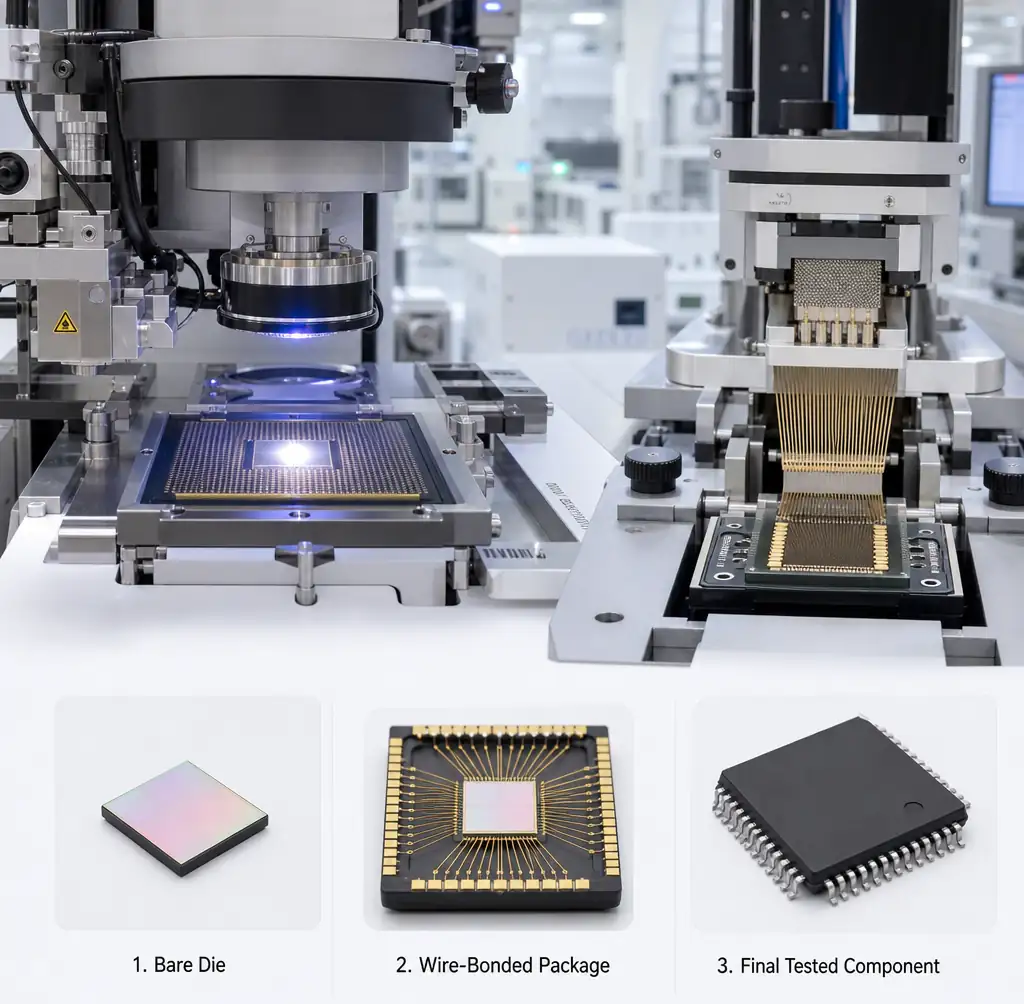 Quy trình đóng gói OSAT bán dẫn cho thấy các hoạt động gắn chip flip-chip và liên kết dây
Phần lớn năng lực OSAT của Malaysia phục vụ các hợp đồng đa quốc gia dài hạn. Khối lượng dưới 50.000 chiếc hàng quý phải đối mặt với thời gian giao hàng kéo dài hoặc phải tìm nguồn cung từ nhà phân phối. Thế mạnh của Malaysia là bao bì đa dạng, sản lượng lớn, nơi chất lượng xứng đáng với mức giá cao hơn các lựa chọn dựa trên chi phí.
Việt Nam: Lắp ráp PCB và linh kiện điện cơ
Ngành điện tử của Việt Nam tập trung vào lắp ráp cuối cùng đa quốc gia. Đối với việc mua sắm linh kiện, Việt Nam có lợi thế về các cụm PCB có sẵn, dây cáp và mô-đun tích hợp thay vì các linh kiện rời rạc. Các nhà máy PCB Việt Nam duy trì khả năng IPC-A-610 Class 2 hoặc 3, với thời gian chuẩn bị nguyên mẫu 2-3 tuần và thời gian sản xuất khối lượng 4-6 tuần. Tuy nhiên, hầu hết các thiết bị thụ động, IC và đầu nối đều được nhập khẩu. Điểm mạnh của Việt Nam là các hội đồng đông người, nơi chi phí lao động bù đắp thuế nhập khẩu và thời gian giao hàng.
Thái Lan: Điện tử ô tô và công nghiệp
Hệ sinh thái ô tô của Thái Lan, được xây dựng qua nhiều thập kỷ cung cấp cho Toyota và Honda, cung cấp cơ sở cung cấp chất lượng ô tô mạnh nhất khu vực. Đối với các bộ phận AEC-Q được chứng nhận, đầu nối ô tô, mô-đun nguồn hoặc cụm cảm biến, mạng lưới của Thái Lan mang đến chiều sâu và kinh nghiệm.
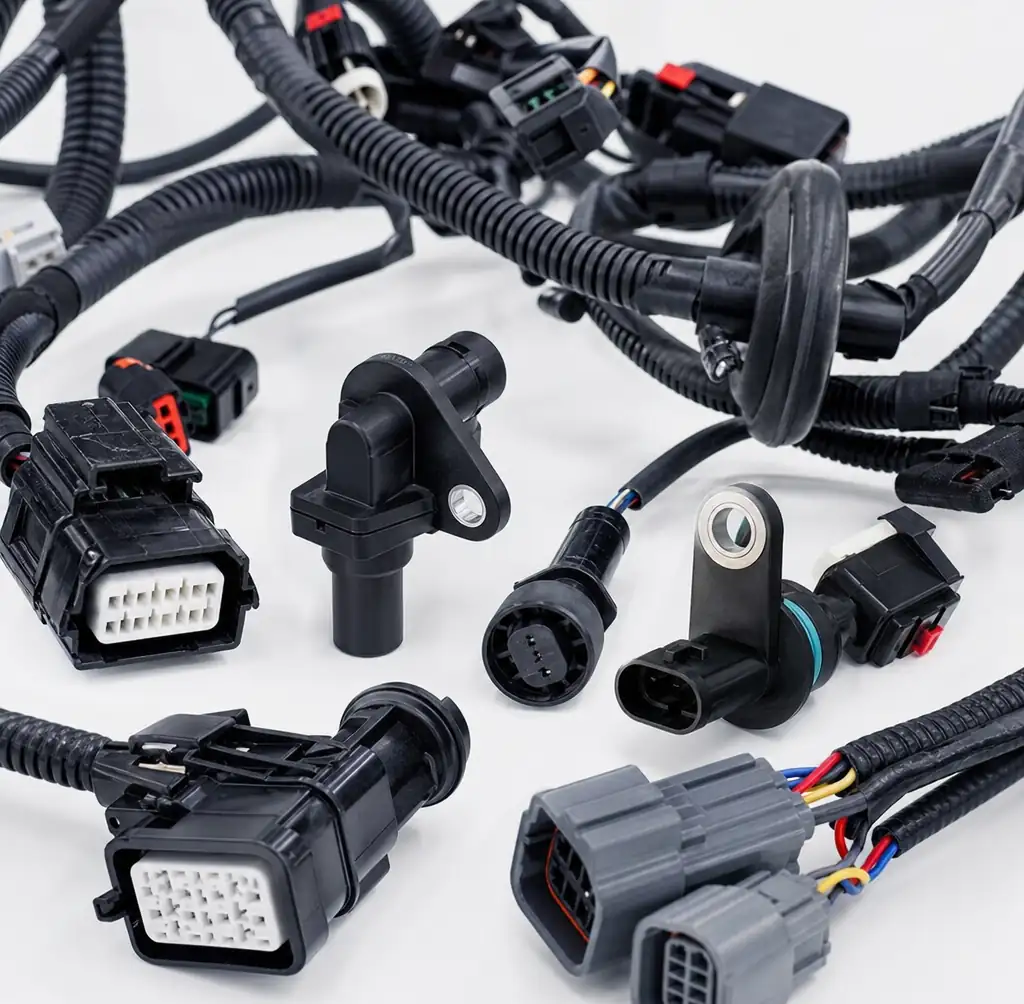 Đầu nối điện tử và bộ dây cáp đạt chuẩn ô tô cho ứng dụng xe
Các nhà cung cấp ô tô Thái Lan thường xuyên quản lý hồ sơ PPAP, tuyên bố IMDS và hệ thống IATF 16949, khiến Thái Lan trở thành lựa chọn hàng đầu về thông số kỹ thuật ô tô. Điện tử công nghiệp cho tự động hóa nhà máy cũng hưởng lợi từ hạ tầng chất lượng và sự hỗ trợ thông thạo tiếng Anh của Thái Lan.
Indonesia và Philippines
Indonesia tập trung vào thiết bị tiêu dùng và điện tử công suất. Đối với các linh kiện từ tính, máy biến áp, nguồn điện cơ bản hoặc đầu nối khối lượng lớn với giá cạnh tranh, các nhà sản xuất Indonesia mang lại lợi thế về chi phí nhưng cần kiểm tra kỹ hơn. Philippines duy trì ổn định trong sản xuất OSAT và đầu nối chính xác cho các ứng dụng viễn thông, mặc dù công suất còn hạn chế so với Malaysia.
Hạ tầng chuỗi cung ứng linh kiện
Chuỗi cung ứng thành phần của Đông Nam Á vẫn mỏng hơn so với hệ sinh thái Thâm Quyến của Trung Quốc. Một nhà máy ở Thâm Quyến cung cấp 80-90% linh kiện trong vòng 50km với thời gian giao hàng 1-3 ngày. Một cơ sở tại Việt Nam hoặc Malaysia nhập khẩu 60-70% nội dung từ Trung Quốc, Đài Loan hoặc Nhật Bản, kéo dài chu kỳ thêm 2-4 tuần.
Hiệp định thương mại RCEP đã tạo ra các hành lang miễn thuế giữa ASEAN, Trung Quốc, Nhật Bản và Hàn Quốc, giảm thuế nhập khẩu nhưng không giảm chậm trễ hậu cần. Thương mại linh kiện điện tử từ Đông Nam Á đạt 28,8 tỷ USD trong năm 2025, tăng 533% so với cùng kỳ năm trước so với các nhà máy nhập khẩu linh kiện để lắp ráp.
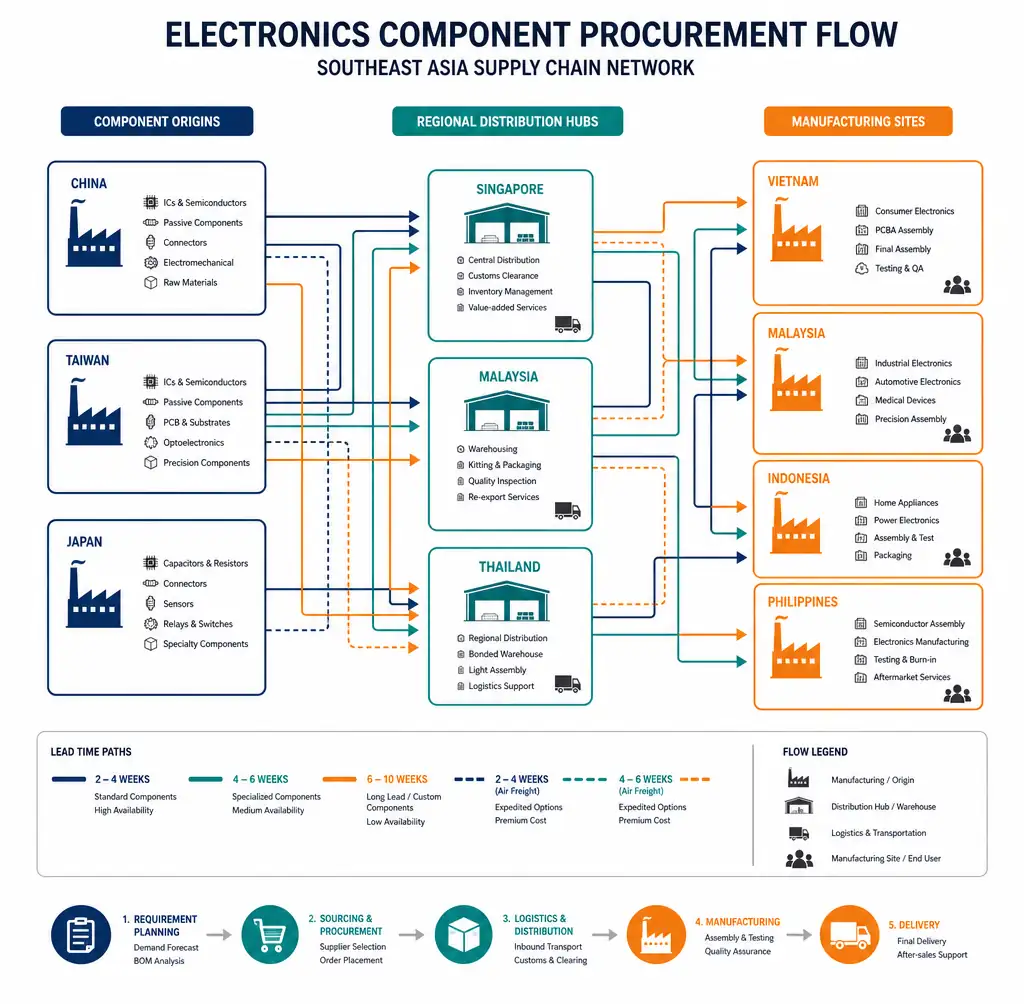 Sơ đồ luồng chuỗi cung ứng linh kiện điện tử thể hiện nhập khẩu và phân phối trên toàn Đông Nam Á
Cấu trúc này tạo ra ba kịch bản. Các linh kiện sản xuất tại khu vực (đầu nối, bộ cáp, máy biến áp) có thời gian giao hàng từ 2-4 tuần. Các linh kiện nhập khẩu bởi các nhà phân phối khu vực (thụ động phổ biến, IC tiêu chuẩn) phải chờ 4-6 tuần. Các thành phần yêu cầu nhập khẩu trực tiếp phải chờ 6-10 tuần, bao gồm cả thủ tục hải quan.
| Danh mục linh kiện | Sản xuất SEA tại địa phương | Thời gian giao hàng điển hình | Phương pháp tìm nguồn cung ứng được khuyến nghị |
|---|---|---|---|
| Đầu nối, cụm cáp | Có - Thái Lan, Philippines, Việt Nam | 2-4 tuần | Nguồn cung ứng nhà máy trực tiếp cạnh tranh |
| Thụ động (điện trở, tụ điện, cuộn cảm) | Giới hạn - phụ thuộc vào nhập khẩu | 4-6 tuần | Các nhà phân phối khu vực được ưu tiên |
| IC tiêu chuẩn (MCU, op-amp, bộ điều chỉnh) | Không - nhập từ CN/TW/JP | 6-8 tuần | Hợp nhất với các nhà phân phối được ủy quyền |
| Chất bán dẫn công suất (MOSFET, IGBT) | Chỉ xét nghiệm/đóng gói (Malaysia) | 6-10 tuần | Nhà sản xuất trực tiếp + kho khu vực |
| Các linh kiện tùy chỉnh/chuyên dụng | Từng trường hợp cụ thể | 8-12 tuần | Yêu cầu chiến lược tồn kho hai vùng |
Các nhà phân phối khu vực với kho bãi tại Singapore, Malaysia hoặc Thái Lan cung cấp quyền truy cập đáng tin cậy. Arrow, Avnet và WPG Electronics duy trì tồn kho hỗ trợ giao hàng trong 4-6 tuần cho các mặt hàng trong catalog. Duy trì tồn kho an toàn 8-12 tuần cho các linh kiện có thời gian chờ dài và tồn kho do nhà cung cấp quản lý giúp giảm thiểu sự biến động.
Yêu cầu kiểm tra chất lượng và tuân thủ
Việc kiểm tra chất lượng linh kiện phải tăng cường đối với nguồn cung Đông Nam Á do tỷ lệ hàng giả cao hơn ở các thị trường xám và mức độ trưởng thành kiểm soát chất lượng biến động. Hướng dẫn xác minh tính xác thực(/blogDetail/counterfeit-component-detection-guide-hitop-tech-limited/206.html) của chúng tôi trình bày chi tiết các phương pháp với các cân nhắc đặc thù theo từng vùng.
Tỷ lệ hàng giả đạt 8-15% ở các kênh thị trường xám so với gần như không có ở các nhà phân phối được ủy quyền. Các thành phần từ các nhà môi giới không được phép cần được kiểm tra trực quan dưới kính phóng đại, kiểm tra tham số điện và phân tích XRF để xác minh khung chì. Các mạng lưới được ủy quyền (Arrow Malaysia, Avnet Singapore, WPG Thái Lan) duy trì hoạt động theo tiêu chuẩn ISO 9001 với khả năng truy xuất nguồn gốc của nhà sản xuất. Đối với các bộ phận lỗi thời hoặc đã được phân bổ cần thị trường xám, hãy thực hiện kiểm tra trực quan 100% với kiểm tra điện mẫu cho từng lô.
Các linh kiện cho ứng dụng ô tô tại Thái Lan yêu cầu chứng nhận AEC-Q, nộp hồ sơ PPAP và thường xác nhận kiểm tra khu vực. Hướng dẫn linh kiện ô tô của chúng tôi (/blogDetail/automotive-component-selection-guide-aec-q-standards-temperature-grades/207.html) bao gồm các tiêu chuẩn, nhưng các OEM Thái Lan thường yêu cầu kiểm tra phòng thí nghiệm địa phương (TUV Thailand, SGS Thailand) đối với nhà cung cấp lần đầu.
Môi trường nhiệt đới Đông Nam Á gây áp lực lên các thành phần vượt quá tiêu chuẩn của vùng nhiệt đới. Nhiệt độ môi trường vượt quá 35°C trong các cơ sở không kiểm soát khí hậu với độ ẩm 80-95% trong mùa mưa. Chỉ định các cấp nhiệt độ công nghiệp (tối thiểu -40°C đến 85°C) cho thiết bị không kiểm soát môi trường. Lớp phủ conformal cung cấp khả năng bảo vệ độ ẩm thiết yếu. Tụ điện phân cần giảm công suất xuống 50% giới hạn điện áp và nhiệt độ trong điều kiện khu vực.
Logistics và Mua sắm xuyên biên giới {#logistics}
Logistics xuyên biên giới trong khu vực Đông Nam Á đã cải thiện nhờ RCEP nhưng vẫn phức tạp hơn so với vận tải nội trung. Hồng Kông đóng vai trò là trung tâm trung chuyển quan trọng, với thương mại điện tử ASEAN-Hồng Kông tăng trưởng 28% so với cùng kỳ năm trước.
Mỗi quốc gia duy trì các thủ tục hải quan riêng biệt. Việt Nam yêu cầu giấy tờ bằng tiếng Việt, mất thêm 2-3 ngày. Malaysia xử lý điện tử hiệu quả nhưng yêu cầu mã HS chi tiết và giấy tờ xuất xứ. Thái Lan trung bình mất 3-5 ngày để được giải quyết nếu có giấy tờ hợp lệ nhưng có thể kéo dài đến 2-3 tuần đối với tranh chấp. Các khu vực thương mại tự do ở Penang (Malaysia), Batam (Indonesia) và Laem Chabang (Thái Lan) cung cấp ưu đãi thuế cho các linh kiện nhập khẩu để lắp ráp tái xuất, giảm yêu cầu vốn lưu động.
Vận tải hàng không chiếm ưu thế trong các linh kiện điện tử do mật độ giá trị và độ nhạy thời gian giao hàng. DHL, FedEx và UPS cung cấp giao hàng trong 3-5 ngày giữa các nhà cung cấp Đông Bắc Á và các địa điểm Đông Nam Á, mặc dù chi phí cao hơn 15-25% so với vận chuyển nội địa Trung Quốc. Vận chuyển đường biển giảm chi phí từ 60-70% nhưng kéo dài thời gian giao hàng lên 2-3 tuần do nguy cơ ngưng tụ container. Các nhà cung cấp khu vực như Kerry Logistics mang lại lợi thế về chi phí nhưng yêu cầu theo dõi chủ động.
Chiến lược tối ưu hóa chi phí
Chi phí linh kiện phản ánh ba yếu tố: giá cơ bản, thuế nhập khẩu và logistics. Chiến lược giảm chi phí của chúng tôi áp dụng theo khu vực với các cơ hội tối ưu hóa cụ thể.
Các nhà phân phối Đông Nam Á cung cấp giá theo số lượng lớn với ngưỡng thấp hơn. Chi tiêu 50.000 đô la mỗi quý thường mở khóa 8-12% cải thiện và quản lý chuyên biệt. Dịch vụ hợp nhất nhà cung cấp của chúng tôi (/supplierConsolidation.html) phân tích chi tiêu giữa các địa điểm và thương lượng giá hợp nhất, mang lại mức giảm 15-30% so với mua hàng từng địa điểm.
Việc phân bổ linh kiện trong thời gian thiếu hụt ảnh hưởng không cân xứng đến sản xuất Đông Nam Á vì các cơ sở khu vực được ưu tiên thấp hơn so với khách hàng Đông Bắc. Triển khai các chiến lược đa nguồn cho các linh kiện dễ phân bổ (PMIC, MCU, phụ tùng ô tô). Xác định 2-3 lựa chọn thay thế trong quá trình thiết kế cho mỗi bộ phận rủi ro phân bổ. Duy trì mối quan hệ với nhiều nhà phân phối; Trong quá trình phân bổ, các nhà phân phối ưu tiên khách hàng có lịch sử đã được thiết lập và có khả năng nhận diện nhu cầu.
Câu hỏi thường gặp
Thời gian giao hàng linh kiện Đông Nam Á so với nguồn cung từ Trung Quốc như thế nào?
Thời gian giao linh kiện ở Đông Nam Á thường kéo dài 2-4 tuần so với nguồn cung từ Trung Quốc tương đương cho hầu hết các linh kiện điện tử vì 60-70% thành phần linh kiện được nhập khẩu từ Trung Quốc, Đài Loan hoặc Nhật Bản. Các linh kiện sản xuất tại khu vực (đầu nối, cụm cáp, máy biến áp) cung cấp thời gian giao hàng 2-4 tuần, cạnh tranh với Trung Quốc. Các IC tiêu chuẩn và thụ động phân phối theo khu vực có thời gian giao hàng 4-6 tuần. Các bộ phận chuyên dụng cần nhập khẩu trực tiếp kéo dài từ 6-10 tuần. Để lập kế hoạch mua sắm, hãy tăng thêm 3-4 tuần so với thời gian giao hàng tương đương Trung Quốc khi nhập nguồn cung từ sản xuất Đông Nam Á.
Quốc gia Đông Nam Á nào cung cấp nguồn cung linh kiện tốt nhất cho người mua số lượng nhỏ?
Thái Lan cung cấp hệ sinh thái cung ứng linh kiện dễ tiếp cận nhất cho các khách hàng số lượng nhỏ, đặc biệt là các thiết bị điện tử ô tô và công nghiệp. Các nhà cung cấp Thái Lan thường xuyên xử lý số lượng nguyên mẫu (100-500 chiếc) và duy trì hỗ trợ kỹ thuật bằng tiếng Anh. Năng lực bán dẫn của Malaysia chủ yếu phục vụ khách hàng có khối lượng lớn. Ngành điện tử của Việt Nam tập trung vào các hoạt động đa quốc gia với khả năng tiếp cận hạn chế của các khách hàng nhỏ. Đối với đơn hàng dưới 5.000 đơn vị mỗi quý, cơ sở nhà cung cấp thân thiện với doanh nghiệp vừa và nhỏ và mạng lưới nhà phân phối khu vực của Thái Lan mang lại khả năng phản hồi tốt nhất.
Tôi nên yêu cầu những chứng nhận chất lượng nào từ các nhà cung cấp linh kiện Đông Nam Á?
Yêu cầu chứng nhận quản lý chất lượng ISO 9001 cơ bản từ bất kỳ nhà cung cấp hoặc nhà phân phối linh kiện Đông Nam Á nào. Đối với các ứng dụng ô tô, hãy kiểm tra chứng nhận IATF 16949 và chứng nhận AEC-Q cho các bộ phận cung cấp. Sản xuất thiết bị y tế yêu cầu tài liệu tuân thủ ISO 13485 và IEC 60601. Phòng chống hàng giả cần chứng nhận AS6496 hoặc IDEA-STD-1010 cho các nhà phân phối độc lập. Yêu cầu báo cáo kiểm tra từ các phòng thí nghiệm bên thứ ba được công nhận (TUV, SGS, UL) thay vì tự chứng nhận nhà cung cấp cho các ứng dụng quan trọng. Dịch vụ mua sắm của chúng tôi bao gồm kiểm tra chất lượng nhà cung cấp, xác minh tính xác thực của chứng nhận và kiểm tra cơ sở vật chất.
Làm thế nào để tôi xác minh tính xác thực của linh kiện khi tìm nguồn cung từ Đông Nam Á?
Triển khai xác minh ba tầng cho nguồn cung linh kiện Đông Nam Á. Đầu tiên, ưu tiên các kênh phân phối được ủy quyền (Arrow, Avnet, WPG) nơi rủi ro hàng giả gần bằng không. Thứ hai, đối với việc mua hàng trên thị trường xám, hãy kiểm tra 100% bằng mắt thường dưới độ phóng đại 10-40x để kiểm tra độ nhất quán của đánh dấu, tình trạng bao bì và lớp vỏ chì. Thứ ba, thực hiện kiểm tra điện mẫu xác thực các thông số tham số trên các dải điện áp và nhiệt độ. Phân tích XRF xác minh thành phần khung chì cho các thành phần có rủi ro cao. Các quy trình phát hiện hàng giả của chúng tôi chi tiết quy trình kiểm tra, nhưng nguồn cung từ Đông Nam Á đòi hỏi sự giám sát chặt chẽ hơn so với mua trực tiếp từ nhà sản xuất.
Những yếu tố chi phí chính khi tìm nguồn cung linh kiện ở Đông Nam Á là gì?
Ba yếu tố thúc đẩy chi phí linh kiện Đông Nam Á vượt ra ngoài giá thành phần cơ bản. Thuế nhập khẩu dao động từ 0% (điện tử được chứng nhận RCEP) đến 5-10% (không đủ điều kiện hoặc ngoài RCEP) tùy thuộc vào phân loại linh kiện và quốc gia xuất xứ. Chi phí logistics tăng thêm 15-25% so với vận chuyển nội địa Trung Quốc do yêu cầu vận chuyển hàng không và nhiều lần qua biên giới. Chi phí vận chuyển hàng tồn kho dao động từ 25-30% mỗi năm do lãi suất khu vực cao hơn và thời gian chuẩn bị chuỗi cung ứng kéo dài đòi hỏi lượng hàng tồn kho an toàn lớn hơn. Tổng chi phí cập bến thường cao hơn 10-20% so với nguồn cung tương đương Trung Quốc, được bù đắp bởi lợi ích đa dạng hóa chuỗi cung ứng và quyền tiếp cận thương mại ưu đãi đến một số thị trường nhất định.
Làm thế nào để tôi quản lý tình trạng lỗi thời của linh kiện trong sản xuất Đông Nam Á?
Sản xuất Đông Nam Á đối mặt với nguy cơ lỗi thời cao hơn vì các nhà phân phối khu vực duy trì tồn kho nhỏ hơn so với các trung tâm phân phối tại Trung Quốc, và các nhà sản xuất ưu tiên thị trường Đông Bắc Á để kéo dài vòng đời sản phẩm. Đăng ký dịch vụ thông báo thay đổi sản phẩm (PCN) từ các nhà sản xuất và nhà phân phối phục vụ các địa điểm Đông Nam Á của bạn. Duy trì tồn kho 12-18 tháng cho các linh kiện hết vòng đời so với 6-12 tháng ở các thị trường phát triển hơn do chu kỳ mua hàng khu vực kéo dài. Thiết kế các linh kiện với cam kết vòng đời dài và nhiều nguồn được ủy quyền. Dịch vụ quản lý vòng đời sản phẩm(/productLifecycle.html) của chúng tôi theo dõi tình trạng sẵn sàng của các linh kiện Đông Nam Á và kích hoạt các sáng kiến thiết kế lại trước khi lỗi thời làm gián đoạn sản xuất.
Kết luận
Sản xuất điện tử Đông Nam Á mang lại lợi ích đa dạng hóa chuỗi cung ứng, với thị trường bán dẫn ASEAN dự kiến đạt 212 tỷ USD vào năm 2032 và tiếp tục đầu tư đa quốc gia. Việc tìm nguồn linh kiện thành công đòi hỏi phải hiểu rõ các điểm mạnh đặc thù của từng quốc gia, các giới hạn trong chuỗi cung ứng và yêu cầu chất lượng khác biệt so với mua sắm ở Đông Bắc Á.
Đối với các nhóm mua sắm quản lý sản xuất Đông Nam Á, hợp nhất chi tiêu thông qua các nhà phân phối được ủy quyền khu vực để tạo lợi thế về giá, thiết lập tồn kho do nhà cung cấp quản lý cho các linh kiện có thời gian dài vượt quá $200,000 mỗi năm, và triển khai các chiến lược đa nguồn cho các linh kiện dễ phân bổ. Chi phí khu vực cao hơn 10-20% so với nguồn cung tương đương Trung Quốc nhưng mang lại khả năng chống chịu chuỗi cung ứng, điều này xứng đáng với mức phí bảo hiểm.
Sẵn sàng tối ưu hóa nguồn cung linh kiện Đông Nam Á chưa? Yêu cầu báo giá để thảo luận về cách chuyên môn mua sắm khu vực và mối quan hệ với nhà sản xuất của chúng tôi đảm bảo giá cả cạnh tranh, chất lượng đã được xác minh và giao hàng đáng tin cậy trên khắp Việt Nam, Malaysia, Thái Lan và Indonesia.