




Hướng dẫn tuân thủ RoHS và REACH châu Âu cho linh kiện điện tử
Việc không tuân thủ quy định trên thị trường điện tử châu Âu sẽ bị phạt vượt quá €100,000 cho mỗi vi phạm, thu hồi sản phẩm tốn từ 15-40% doanh thu hàng năm, và hạn chế tiếp cận thị trường vĩnh viễn. Đối với các nhà quản lý mua sắm tìm nguồn cung ứng linh kiện cho phân phối EU, việc hiểu rõ các chất hạn chế RoHS, nghĩa vụ của REACH SVHC và yêu cầu về tài liệu sẽ quyết định liệu sản phẩm có được thông qua hải quan hay bị tịch thu.
Hướng dẫn này chuyển hóa sự phức tạp về quy định thành các giao thức xác minh có thể hành động dựa trên 2.400+ cuộc kiểm toán tuân thủ linh kiện trên các lĩnh vực ô tô, công nghiệp và điện tử tiêu dùng.
Dịch vụ mua sắm của Hitop Tech Limited (/procurement.html) bao gồm xác minh tuân thủ RoHS/REACH đầy đủ, đảm bảo mọi thành phần đều đáp ứng các tiêu chuẩn quy định châu Âu.
Mục lục
- [Hiểu về RoHS và REACH: Phạm vi và sự khác biệt] (#rohs khác biệt về tầm với)
- Các chất hạn chế RoHS và giới hạn nồng độ
- Danh sách và Quản lý Chất Ứng viên REACH SVHC
- [Tài liệu tuân thủ và Tuyên bố của nhà cung cấp] (tài liệu #compliance)
- [Yêu cầu kiểm tra và xác minh bên thứ ba] (yêu cầu #testing)
- Miễn trừ và Miễn trừ theo ngành
- Câu hỏi thường gặp
- Kết luận
Hiểu về RoHS và REACH: Phạm vi và sự khác biệt
RoHS (Hạn chế các chất nguy hiểm) và REACH (Đăng ký, Đánh giá, Cấp phép và Hạn chế Hóa chất) là các quy định châu Âu riêng biệt với phạm vi giao thoa nhưng về cơ bản khác nhau. Sự nhầm lẫn giữa các khung này tạo ra những lỗi tuân thủ phổ biến nhất.
RoHS 3 (Chỉ thị 2015/863/EU) hạn chế mười chất cụ thể trong thiết bị điện và điện tử được đưa ra thị trường EU. Chỉ thị áp dụng ở cấp độ sản phẩm—các thiết bị hoàn chỉnh và các bộ phận phụ của chúng không được chứa các chất bị hạn chế vượt quá ngưỡng nồng độ.
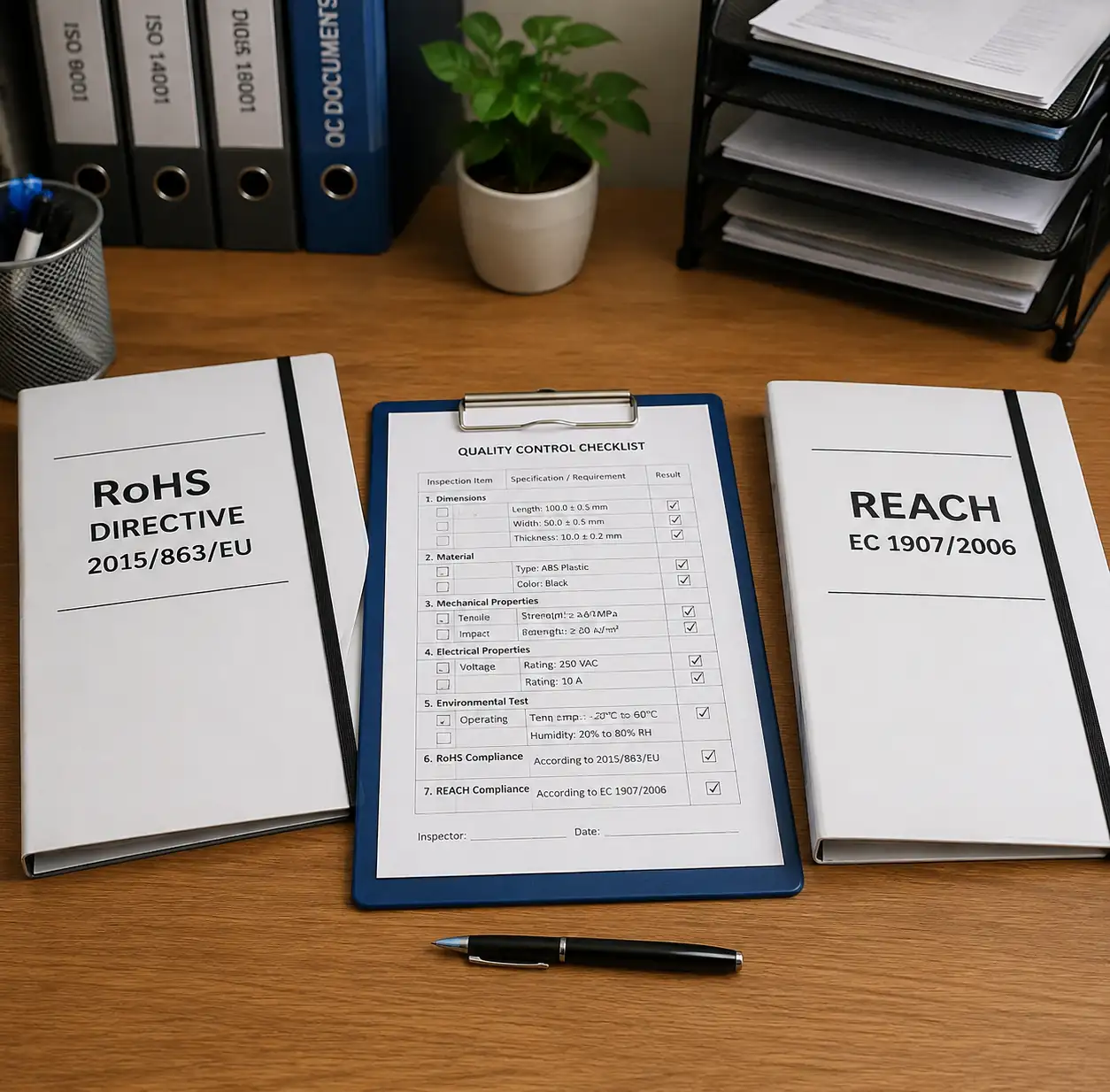 So sánh khung pháp lý RoHS và REACH cho linh kiện điện tử
REACH (Quy định EC 1907/2006) điều chỉnh các chất hóa học trong suốt vòng đời của chúng, yêu cầu đăng ký, đánh giá và cấp phép cho các chất được sản xuất hoặc nhập khẩu trên một tấn hàng năm. Đối với các nhà sản xuất thiết bị điện tử, Danh sách Ứng viên các Chất Có Mối Quan Ngại Rất Cao (SVHC) của REACH tạo ra nghĩa vụ thông báo khi các sản phẩm chứa SVHC trên 0,1% trọng lượng/trọng lượng.
| Khía cạnh Quy định | RoHS 3 (2015/863/EU) | REACH (EC 1907/2006) |
|---|---|---|
| Phạm vi chính | Thiết bị điện và điện tử | Tất cả các chất hóa học |
| Số lượng chất | 10 chất hạn chế | 240+ SVHC (cập nhật hai lần mỗi năm) |
| Ngưỡng nồng độ | 0,1% (1000 ppm) theo vật liệu đồng nhất | 0,1% (1000 ppm) theo trọng lượng sản phẩm |
| Phương pháp tuân thủ | Hạn chế chất - không được vượt quá giới hạn | Cần thông báo - tiết lộ cho khách hàng |
| Hình phạt đối với vi phạm | Lệnh cấm thị trường, phạt tiền €10.000-€100.000+ | Phạt lên đến €500,000 |
| Tần suất cập nhật | Thỉnh thoảng (cập nhật lớn gần nhất năm 2015) | Bổ sung SVHC hai lần mỗi năm |
Điểm khác biệt quan trọng: RoHS cấm các chất vượt ngưỡng quy định, khiến các sản phẩm không tuân thủ trở nên bất hợp pháp để bán. REACH yêu cầu thông báo và giao tiếp nhưng cho phép các sản phẩm chứa SVHC nếu được công khai đúng cách. Cả hai quy định đều yêu cầu các tuyên bố tài liệu của nhà cung cấp và kiểm tra vật liệu, nhưng các phương thức lỗi khác nhau — RoHS tạo ra rào cản tiếp cận thị trường ngay lập tức, trong khi các vi phạm REACH được giám sát chặt chẽ bởi các cơ quan quản lý.
Các chất hạn chế RoHS và giới hạn nồng độ
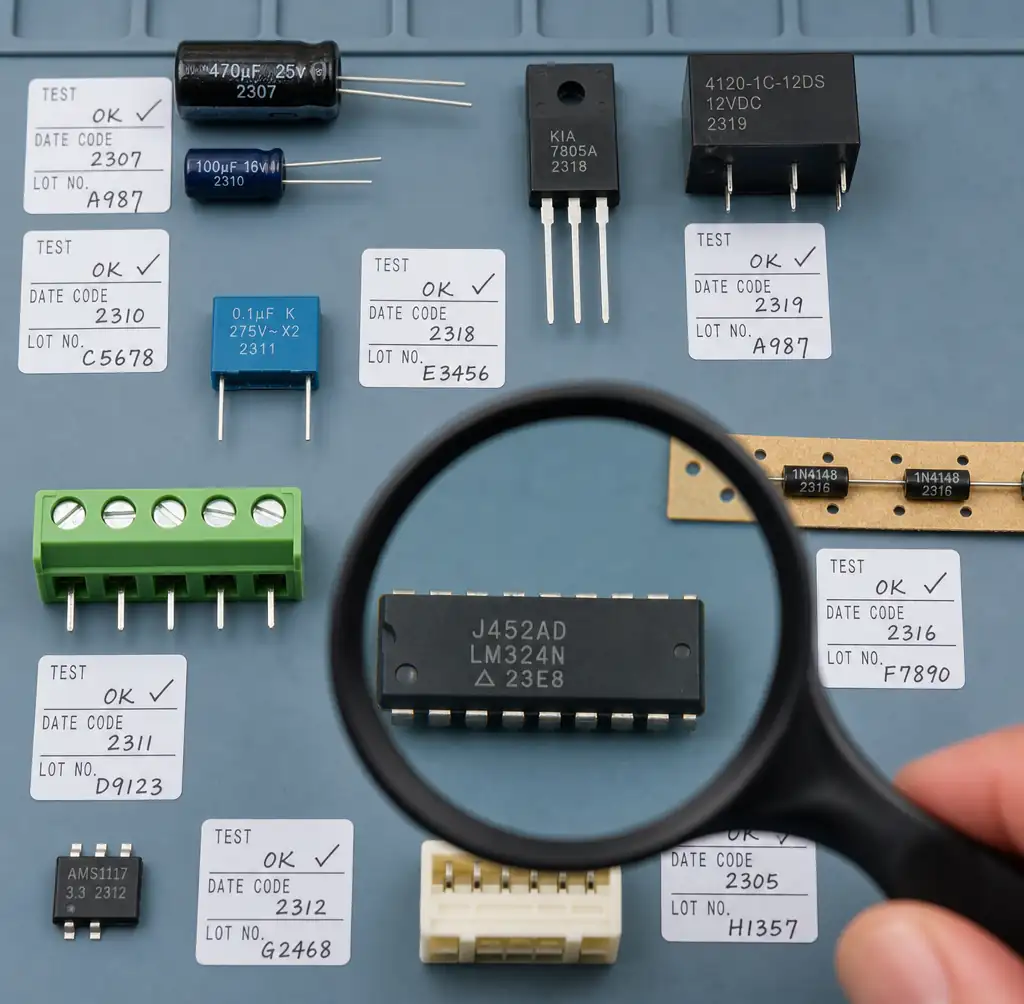 Kiểm tra vật liệu linh kiện điện tử cho các chất hạn chế RoHS
RoHS 3 giới hạn mười chất trong thiết bị điện và điện tử, với giới hạn nồng độ áp dụng cho các vật liệu đồng nhất — các vật liệu đơn lẻ không thể tách cơ học thành các thành phần khác nhau.
| Chất bị hạn chế | Nồng độ tối đa | Ứng dụng chính | Phương pháp phát hiện |
|---|---|---|---|
| Chì (Pb) | 0,1% (1000 ppm) | Hàn, đầu nối, khung chì | XRF, ICP-OES |
| Thủy ngân (Hg) | 0,1% (1000 ppm) | Rơ-le, công tắc, đèn nền | XRF, ICP-MS |
| Cadmium (Cd) | 0,01% (100 ppm) | Mạ tiếp xúc, sắc tố | XRF, ICP-OES |
| Crôm hóa trị sáu (Cr VI) | 0,1% (1000 ppm) | Bảo vệ chống ăn mòn | Phân tích màu sắc |
| PBB / PBDE | 0,1% (1000 ppm) | Chất chống cháy trong nhựa | GC-MS |
| DEHP / BBP / DBP / DIBP | 0,1% (1000 ppm) | Chất hóa dẻo trong cáp, PVC | GC-MS |
Bốn loại phthalate (DEHP, BBP, DBP, DIBP) được bổ sung vào tháng 7 năm 2019 là lần mở rộng RoHS gần đây nhất. Nhiều thiết bị điện tử chứa cáp phthalate-plasticized cũ cần cập nhật chuỗi cung ứng. Giới hạn 100 ppm của cadmium—nghiêm ngặt gấp mười lần so với các chất bị hạn chế khác—tạo ra nguy cơ hỏng hóc cao nhất. Hàn không chì (thường là SAC305: 96,5% Sn, 3,0% Ag, 0,5% Cu) đã thay thế eutectic chì-thiếc, mặc dù nhiều ngoại lệ cho phép thiếc chì trong các ứng dụng cụ thể.
Danh sách REACH SVHC và Quản lý Chất Ứng viên
Danh sách Ứng viên các Chất Có Mối Quan Ngại Rất Cao của REACH bao gồm 240+ chất tính đến tháng 1 năm 2026, với ECHA (Cơ quan Hóa chất Châu Âu) bổ sung 10-20 chất hai lần mỗi năm. Khác với danh sách cố định của RoHS, các nghĩa vụ của REACH SVHC đòi hỏi phải được giám sát liên tục.
SVHC kích hoạt nghĩa vụ thông báo khi có mặt trong các mặt hàng có trọng lượng trên 0,1% trọng lượng (w/w) và nhập khẩu với số lượng vượt quá một tấn hàng năm.
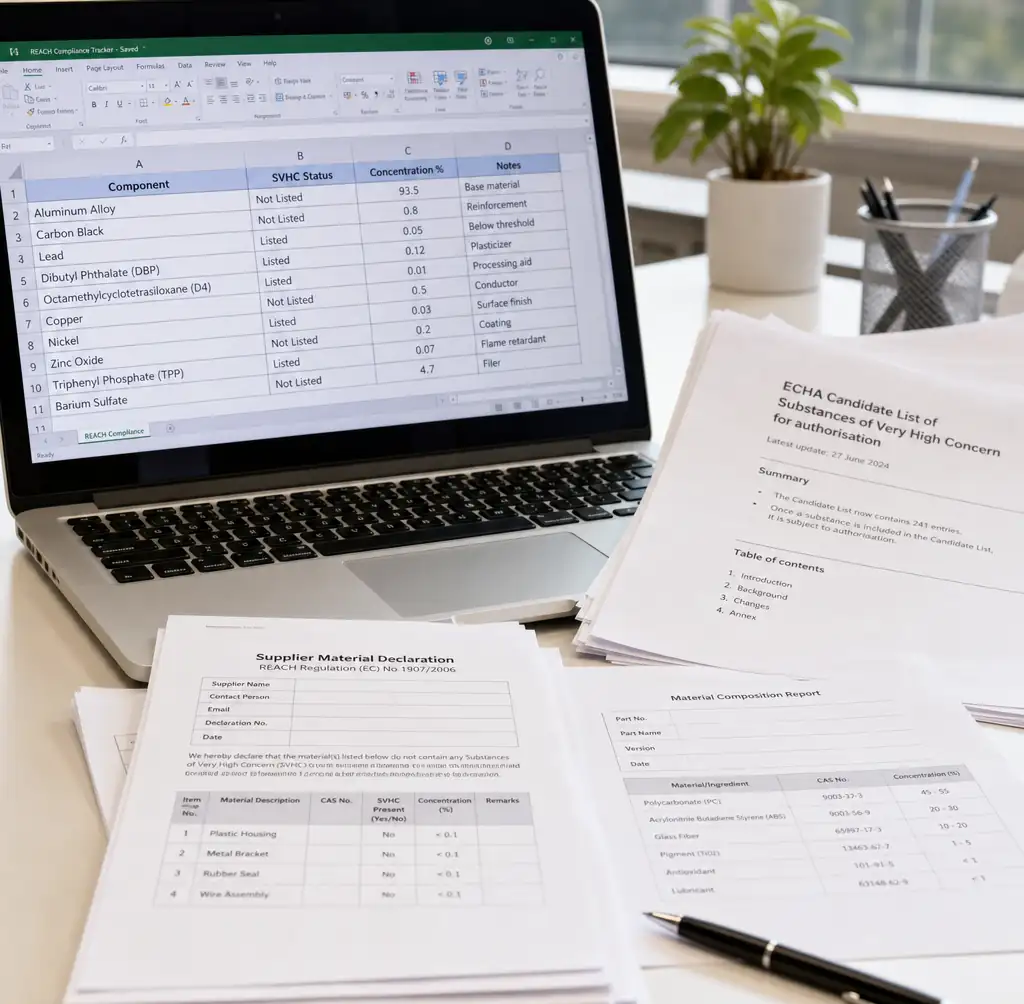 Quy trình giám sát chất và tài liệu của REACH SVHC
Các SVHC phổ biến trong điện tử bao gồm hợp chất chì trong hàn, phthalate trong cáp, hợp chất coban trong pin, chất chống cháy trong lớp PCB và siloxane trong vật liệu giao diện nhiệt.
| Bộ kích hoạt SVHC | Yêu cầu thông báo | Thông tin cần thiết | Dòng thời gian |
|---|---|---|---|
| < 0,1% w/w | Không có (dưới ngưỡng) | N/A | N/A |
| ≥ 0,1% w/w, < 1 tấn/năm | Thực hành tốt tự nguyện | Danh tính SVHC, sử dụng an toàn | Không có hạn chót pháp lý |
| ≥ 0,1% w/w, ≥ 1 tấn/năm | Thông báo bắt buộc cho khách hàng | Nhận dạng, tập trung, sử dụng an toàn của SVHC | Trong vòng 45 ngày |
| ≥ 0,1% w/w trong sản phẩm tiêu dùng | Bắt buộc theo yêu cầu | Danh tính SVHC, sử dụng an toàn | Trong vòng 45 ngày kể từ khi yêu cầu |
Các nhóm mua sắm phải triển khai theo dõi SVHC ở cấp độ linh kiện. Khi ECHA thêm các chất vào Danh sách Ứng viên hai lần mỗi năm (thường là tháng 6 và tháng 12), hãy xem xét từng đặc điểm kỹ thuật thành phần so với danh sách cập nhật. Mối quan hệ nhà sản xuất của chúng tôi bao gồm các nhà cung cấp đã được kiểm duyệt trước duy trì các tuyên bố SVHC hiện hành.
Tài liệu tuân thủ và tuyên bố của nhà cung cấp
Việc xác minh tuân thủ hiệu quả đòi hỏi các nhà cung cấp phải có tài liệu hệ thống bao gồm thành phần vật liệu, báo cáo kiểm tra và cập nhật khai báo. Tài liệu không đầy đủ tạo ra rủi ro tuân thủ chính — ngay cả các thành phần tuân thủ mà không khai báo đúng quy định cũng không vượt qua kiểm tra hải quan.
Định dạng Khai báo Vật liệu
IPC-1752A (Biểu mẫu khai báo vật liệu) cung cấp các mẫu tiêu chuẩn ngành cho việc công bố vật liệu linh kiện, bao gồm Lớp A (khẳng định của nhà cung cấp), Lớp B (khẳng định của nhà cung cấp với dữ liệu kiểm tra bên thứ ba), và Lớp C (dữ liệu kiểm tra phân tích đầy đủ). Khai báo loại B đáp ứng hầu hết các yêu cầu tuân thủ.
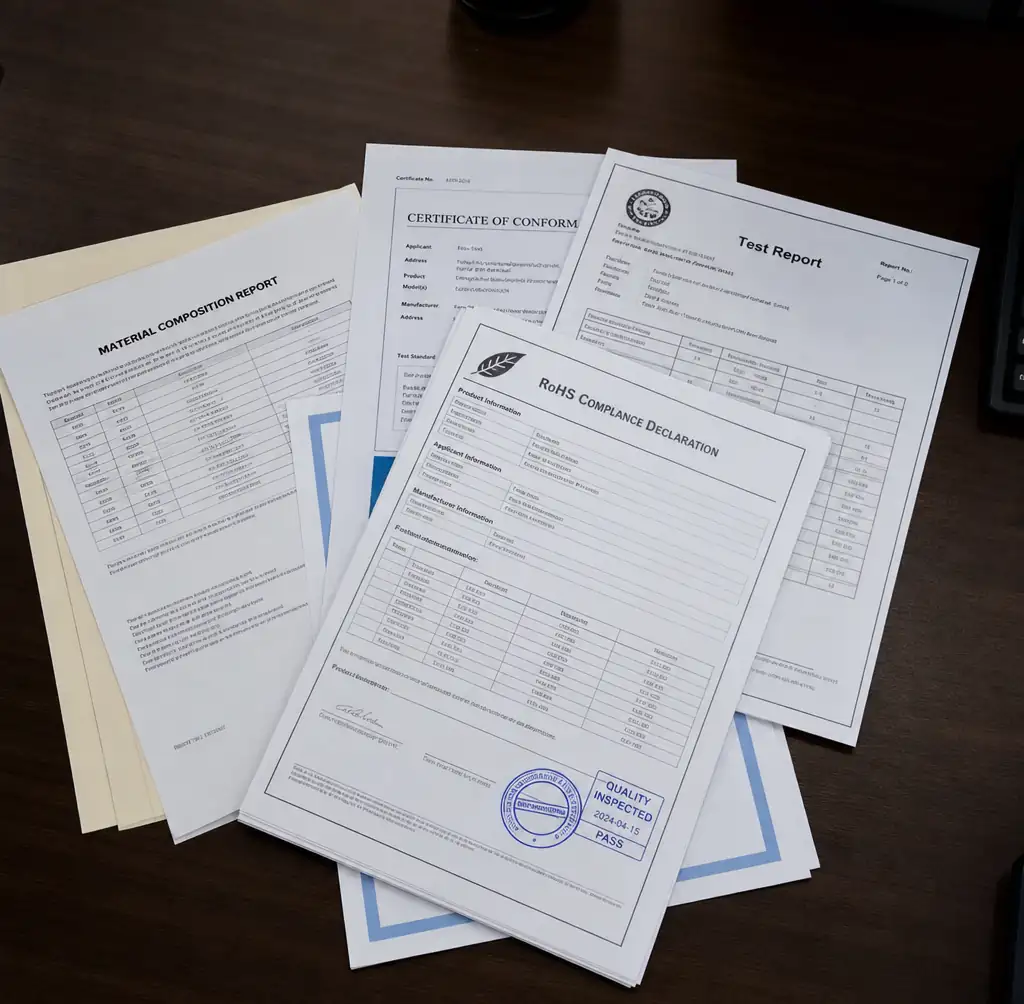 Tài liệu khai báo tuân thủ nhà cung cấp cho RoHS và REACH
IEC 62474 liệt kê các chất có thể khai báo, bao gồm tất cả các chất hạn chế RoHS và các SVHC REACH. IMDS (Hệ thống Dữ liệu Vật liệu Quốc tế), bắt buộc đối với chuỗi cung ứng ô tô, cung cấp dữ liệu thành phần vật liệu chi tiết.
Yêu cầu khai báo nhà cung cấp bao gồm cả tuân thủ RoHS và công bố thông tin REACH SVHC. Tài liệu tối thiểu chấp nhận được bao gồm số linh kiện và phạm vi mã ngày, tuyên bố rõ ràng về sự tuân thủ RoHS theo Chỉ thị 2015/863/EU, danh sách các SVHC REACH có mặt trên 0,1% w/w, chữ ký và ngày của nhà cung cấp, cùng thời gian hiệu lực (thường là 12-24 tháng).
Dấu hiệu cảnh báo bao gồm các tuyên bố chung không cụ thể với số linh kiện được cung cấp, các tuyên bố cũ hơn 24 tháng, từ chối cung cấp dữ liệu kiểm tra, và thiếu thông tin liên hệ nhà cung cấp.
Tài liệu tuân thủ đòi hỏi quản lý vòng đời chủ động. Khi ECHA thêm SVHC vào Danh sách Ứng viên hai lần mỗi năm, các tuyên bố hiện có trở nên không đầy đủ, đòi hỏi phải cập nhật các phiên bản.
Yêu cầu kiểm thử và xác minh bên thứ ba
Kiểm tra vật liệu cung cấp xác minh tuân thủ cuối cùng khi các tuyên bố của nhà cung cấp cần được xác nhận. Kiểm tra độ sâu theo mức độ rủi ro — các nhà phân phối được ủy quyền yêu cầu chấp nhận khai báo, trong khi các giao dịch thị trường xám cần xác minh độc lập.
Phương pháp sàng lọc RoHS
Quang phổ huỳnh quang tia X (XRF) cung cấp khả năng sàng lọc nhanh chóng, không phá hủy các chất bị hạn chế kim loại. Máy phân tích XRF cầm tay có giá từ €15,000 đến €45,000 nhưng cho kết quả trong 30-60 giây.
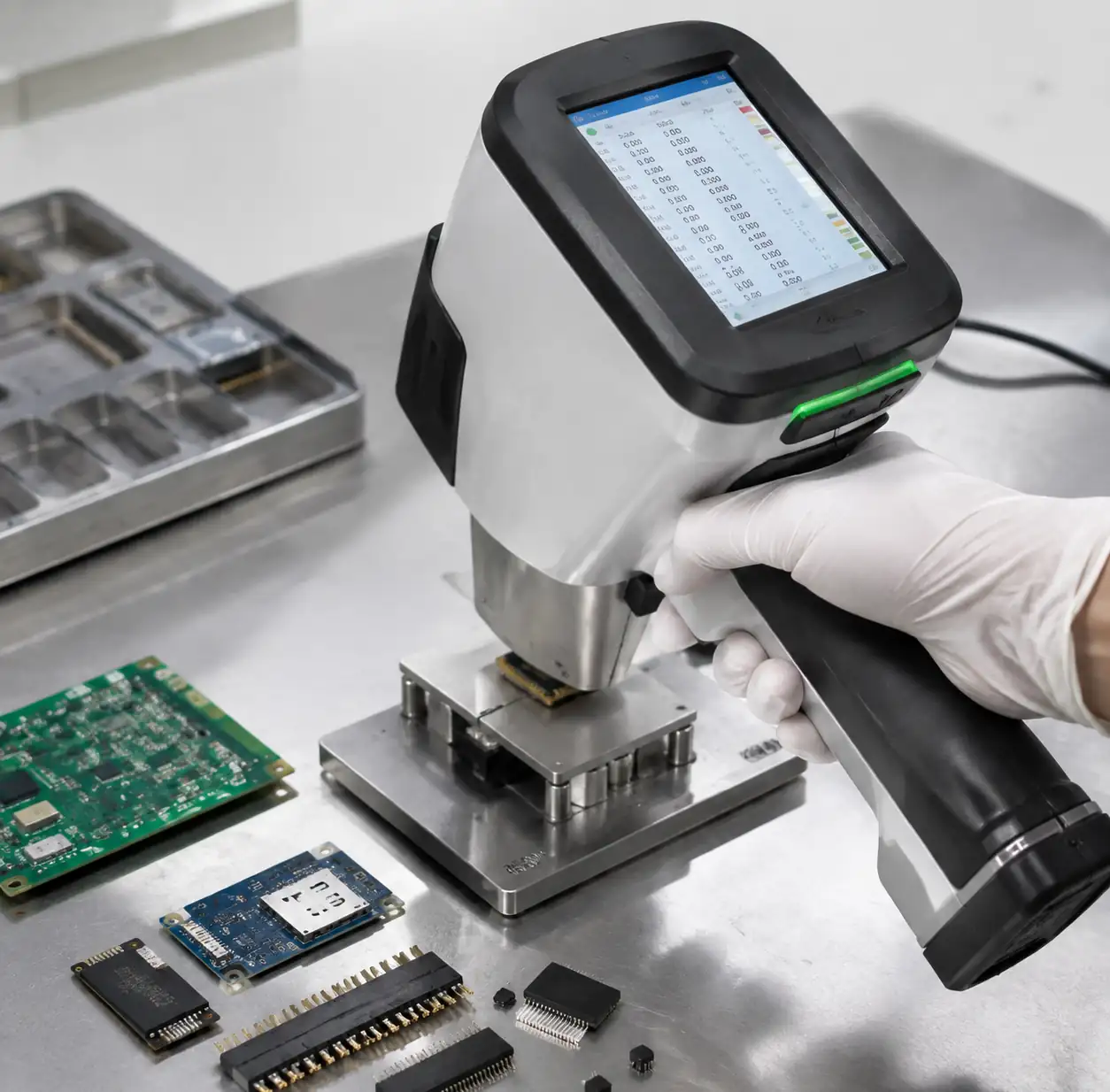 Máy phân tích XRF kiểm tra các linh kiện điện tử cho các chất bị hạn chế
Những hạn chế của XRF bao gồm không thể xuyên thủng vật liệu dày (>2mm) và khó phân tích các chi tiết nhỏ (<3mm). Các chất hữu cơ bị hạn chế (PBB, PBDE, phthalate) cần phân tích sắc ký khí - khối phổ (GC-MS).
Khi sàng lọc XRF cho thấy khả năng không tuân thủ, các phòng thí nghiệm được công nhận (TUV Rheinland, SGS, Intertek) thực hiện kiểm tra RoHS toàn diện với chứng nhận ISO/IEC 17025. Phân tích RoHS đầy đủ có chi phí từ €150-€400 cho mỗi lần kiểm tra vật liệu với thời gian hoàn thành từ 5-10 ngày làm việc.
| Kịch bản thử nghiệm | Phương pháp được khuyến nghị | Chi phí điển hình | Khi nào nên nộp đơn |
|---|---|---|---|
| Nhà phân phối được ủy quyền | Xác minh trực quan các dấu hiệu | €0 | Tất cả các lô hàng, rủi ro thấp |
| Nguồn thị trường xám | Sàng lọc XRF cầm tay | Thiết bị €15K | Rủi ro trung bình, lấy mẫu 10% |
| Thẩm định nhà cung cấp mới | Kiểm tra RoHS đầy đủ từ bên thứ ba | €400-€1,200 | Tất cả nhà cung cấp mới |
| Nghi ngờ không tuân thủ | Phân tích đầy đủ với GC-MS | €800-€2,500 | Bất kỳ cờ tuân thủ nào |
Kiểm tra khi thay đổi nhà cung cấp, thông báo thay đổi quy trình và xác nhận lại hàng năm cho các thành phần quan trọng. Dịch vụ mua sắm của chúng tôi bao gồm các quy trình kiểm tra tuân thủ.
Miễn trừ và các khoản trợ cấp theo ngành nghề
Phụ lục III và IV của RoHS liệt kê các ngoại lệ cụ thể cho phép các chất bị hạn chế khi về mặt kỹ thuật không thể loại bỏ. Hiểu rõ phạm vi miễn trừ và ngày hết hạn giúp ngăn ngừa việc thiết kế lại không cần thiết.
Mối hàn chì cho máy chủ, lưu trữ, hạ tầng mạng và viễn thông vẫn được miễn trừ cho đến tháng 6 năm 2026 theo Miễn trừ 7(c)-I. Điện tử ô tô sử dụng hàn chứa chì trong các bộ điều khiển cho đến các ngày loại bỏ cụ thể. Thiết bị y tế vẫn giữ miễn trừ chì cho thiết bị chẩn đoán.
 Theo dõi hết hạn và lịch tuân thủ miễn trừ RoHS
Các trường hợp ngoại lệ quan trọng bao gồm chì trong thiếc hàn có điểm nóng chảy cao (hợp kim chì 85%+) dùng trong khuôn gắn và chì trong thiếc hàn cho vi xử lý.
Nhiều miễn trừ hết hiệu lực mỗi 2-7 năm, đòi hỏi phải gia hạn hoặc thiết kế lại linh kiện. Khi miễn trừ hết hạn, thời gian ân hạn thường cho phép bán hàng tồn kho hiện có trong 12-18 tháng.
| Loại linh kiện | Miễn trừ | Chất được phép sử dụng | Hạn sử dụng hiện tại | Cần hành động |
|---|---|---|---|---|
| Hàn chì cao (>85% pb) | 7(c)-I | Gắn chì trong khuôn | Tháng 6 năm 2026 | Theo dõi gia hạn |
| Cảm biến thiết bị y tế | 6(b)-II | Chì, thủy ngân | Thiết bị y tế được miễn trừ | Xác minh phân loại |
| Đèn phóng điện | 4(a)-(f) | Thủy ngân (giới hạn quy định) | Thay đổi tùy theo loại đèn | Kiểm tra miễn trừ cụ thể |
| Mạ cadmium | Đã xóa năm 2011 | Không có - bị hạn chế hoàn toàn | Hết hạn | Không cho phép cadmium |
Bảng dữ liệu thành phần nên nêu rõ các số miễn trừ RoHS áp dụng khi có các chất bị hạn chế.
Câu hỏi thường gặp
Làm thế nào để xác định một linh kiện có tuân thủ RoHS hay không?
Yêu cầu tuyên bố tuân thủ RoHS từ nhà cung cấp linh kiện, nêu rõ sự tuân thủ Chỉ thị 2015/863/EU. Xác minh khai báo bao gồm số hiệu bộ phận cụ thể và khoảng mã ngày, bao gồm tuyên bố rằng tất cả mười chất bị hạn chế đều dưới ngưỡng nồng độ, chỉ rõ các trường hợp miễn trừ áp dụng và cung cấp thông tin liên hệ nhà cung cấp. Đối với nhà cung cấp mới hoặc chưa quen thuộc, hãy xác thực các khai báo bằng sàng lọc XRF của bên thứ ba hoặc kiểm tra phân tích đầy đủ. Các nhà phân phối được ủy quyền cung cấp tài liệu tuân thủ đáng tin cậy.
Điều gì xảy ra khi ECHA thêm các chất mới vào danh sách REACH SVHC?
Khi ECHA thêm các chất vào Danh sách Ứng viên REACH (thường là tháng 6 và tháng 12), hãy xem xét tất cả các đặc điểm kỹ thuật thành phần so với danh sách cập nhật trong vòng 30-60 ngày. Liên hệ với các nhà cung cấp yêu cầu khai báo SVHC cập nhật xác nhận liệu có các chất mới trên 0,1% w/w hay không. Nếu phát hiện SVHC mới vượt ngưỡng và khối lượng nhập khẩu của bạn vượt quá một tấn mỗi năm cho mỗi chất, hãy bắt đầu thông báo cho khách hàng trong vòng 45 ngày.
Tôi có thể bán linh kiện chứa REACH SVHC tại thị trường châu Âu không?
Có, REACH cho phép bán các linh kiện chứa SVHC trên 0,1% w/w, nhưng yêu cầu nghĩa vụ thông báo. Nếu nồng độ SVHC vượt quá 0,1% w/w và thể tích hàng năm của bạn vượt quá một tấn mỗi chất, bạn phải thông báo cho khách hàng về sự hiện diện của SVHC và cung cấp thông tin sử dụng an toàn trong vòng 45 ngày. Khác với RoHS, nơi vượt ngưỡng sẽ cấm bán hàng, REACH tập trung vào sự minh bạch.
Miễn trừ RoHS hoạt động như thế nào và khi nào hết hạn?
Phụ lục III và IV của RoHS liệt kê các ứng dụng cụ thể nơi các chất bị hạn chế vẫn được phép. Các trường hợp miễn trừ bao gồm ngày hết hạn (thường từ 2-7 năm) yêu cầu gia hạn định kỳ. Để xin miễn trừ, đơn đăng ký linh kiện của bạn phải phù hợp với phạm vi miễn trừ, bảng dữ liệu nên tham chiếu đến các số miễn trừ cụ thể, và bạn phải theo dõi ngày hết hạn. Khi miễn trừ hết hạn, các khoảng thời gian ân hạn 12-18 tháng thường cho phép bán hàng tồn kho hiện có nhưng cấm sản xuất mới.
Tôi có cần kiểm tra RoHS riêng biệt cho từng thành phần trong sản phẩm không?
Không hẳn vậy. Đối với các bộ phận từ các nhà phân phối được ủy quyền của các nhà sản xuất lớn, các tuyên bố RoHS của nhà cung cấp là đủ mà không cần kiểm tra độc lập. Tiến hành kiểm tra bên thứ ba khi đánh giá nhà cung cấp mới, mua hàng từ các nguồn thị trường xám, điều tra nghi ngờ không tuân thủ hoặc xác nhận lại các thành phần quan trọng. Đối với các sản phẩm có 50-200 bộ phận, hãy kiểm tra 5-10 bộ phận rủi ro cao nhất và dựa vào các tuyên bố của nhà cung cấp cho các bộ phận còn lại.
Tôi cần những giấy tờ gì để làm thủ tục hải quan tại các thị trường châu Âu?
Hải quan châu Âu yêu cầu hóa đơn thương mại, bản khai tuân thủ RoHS của nhà sản xuất theo Chỉ thị 2015/863/EU, bản khai REACH ghi rõ sự hiện diện/vắng mặt SVHC trên 0,1% w/w, và giấy chứng nhận xuất xứ. Ngoài ra, duy trì các tài liệu kỹ thuật bao gồm tuyên bố của nhà cung cấp linh kiện, báo cáo kiểm tra và các lý do miễn trừ. Phát hiện vi phạm tại hải quan sẽ dẫn đến việc giữ sản phẩm, kiểm tra do nhà nhập khẩu chi phí và bị phạt.
Kết luận
Việc tuân thủ RoHS và REACH cho thị trường điện tử châu Âu đòi hỏi việc kiểm định nhà cung cấp một cách hệ thống, quản lý tài liệu và giám sát liên tục khi các quy định thay đổi. RoHS hạn chế mười chất với ngưỡng đậu/không đạt nhị phân cấm bán hàng không tuân thủ, trong khi REACH yêu cầu minh bạch đối với 240+ SVHC được cập nhật hai lần mỗi năm.
Các chương trình tuân thủ hiệu quả kết hợp các tuyên bố của nhà cung cấp từ nguồn được ủy quyền, quy trình kiểm tra dựa trên rủi ro và theo dõi miễn trừ trước ngày hết hạn. Đối với các nhà cung cấp mới hoặc nguồn thị trường xám, hãy xác thực các khai báo bằng sàng lọc XRF hoặc kiểm tra phân tích bên thứ ba. Triển khai kho khai báo theo dõi ngày hết hạn và cập nhật danh sách SVHC.
Việc thực thi quy định của châu Âu được tăng cường với việc các cơ quan hải quan tiến hành kiểm tra vật liệu tại biên giới. Không tuân thủ sẽ bị phạt vượt quá €100,000, tịch thu sản phẩm và hạn chế tiếp cận thị trường. Các tổ chức gia nhập thị trường châu Âu nên thiết lập năng lực kiểm tra XRF hoặc mối quan hệ với phòng thí nghiệm bên thứ ba, triển khai hệ thống quản lý khai báo nhà cung cấp và giám sát cập nhật ECHA SVHC hai lần mỗi năm.
Sẵn sàng đảm bảo tuân thủ châu Âu cho chuỗi cung ứng linh kiện của bạn? Yêu cầu báo giá để thảo luận về cách dịch vụ xác minh tuân thủ và mối quan hệ với nhà sản xuất được ủy quyền cung cấp tài liệu RoHS/REACH, quy trình kiểm tra và giám sát quy định bảo vệ quyền tiếp cận thị trường của bạn.